Material identified first
LVT, laminate, sealed hardwood and tile all look similar underfoot and all need different handling. Getting this wrong is what ruins floors.
Serving Apple Valley, Minnesota & surrounding areas
Floor care · Apple Valley
Flooring is usually the most expensive surface in a building and the first one people notice. Matching the method to the material, and cleaning on a schedule instead of after the damage shows, is what makes a floor last.
The right method for each surface
Floor care is the planned maintenance of every walking surface in a building: sealed concrete, vinyl and LVT, tile and grout, hardwood, laminate, and carpet. It covers routine cleaning, periodic deep work, and the protective steps that decide whether a floor lasts eight years or twenty.
Minnesota is genuinely hard on floors. Winter brings de-icing salt and sand indoors, where that grit acts as an abrasive underfoot and grinds a fine scratch pattern into any finish. Spring melt adds water and mud. By the time a floor looks dull, the damage is usually mechanical, not dirt, and no amount of mopping brings it back.
Apple Valley Cleaning builds floor care around the material rather than a single method. The pH that is right for tile will damage hardwood. The scrubbing that renews sealed concrete will wreck an LVT wear layer. We identify what you actually have first, then set the method and frequency to suit it.
Identify, then treat
Most floor damage we are called to fix was caused by cleaning, not by wear. Usually it is the wrong chemical, too much water, or an abrasive pad on a surface that could not take it.
So we start by identifying the material and its finish, including whether a hard floor is sealed, waxed, coated or bare, and whether a wood floor is surface-finished or penetrating-oiled. Where the surface is not obvious, we test in an out-of-the-way corner rather than guess on the middle of the room.
Then comes dry soil removal, which is the step that matters most and gets skipped most. Grit has to come off before any wet method, or you are simply grinding it in with a machine. On carpet, that means proper vacuuming; on hard floors, dust mopping or vacuuming the full surface including edges and corners.
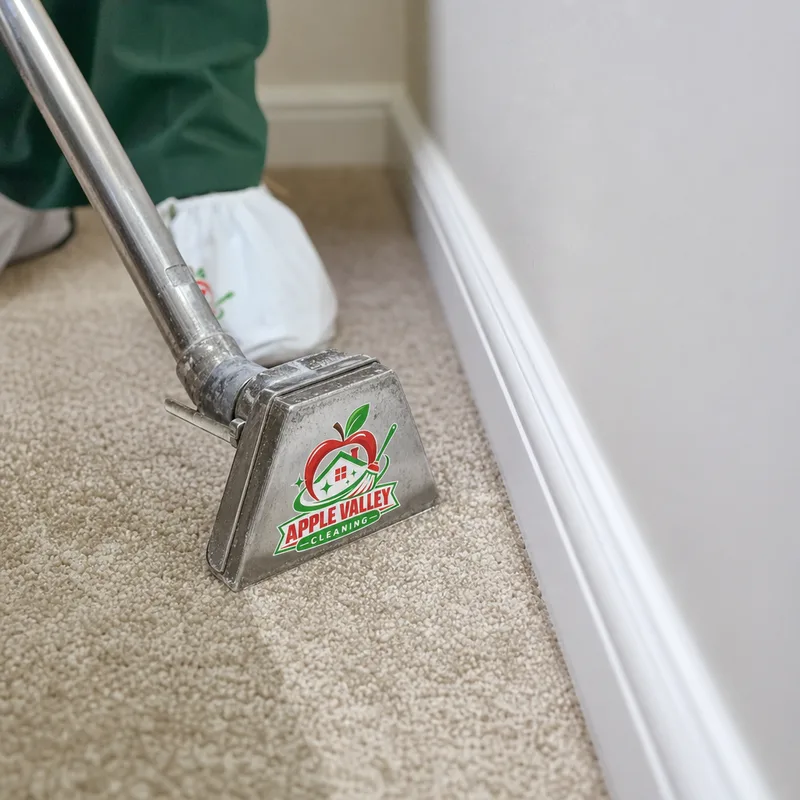
Only then does the wet method go down, matched to the material: neutral cleaner and controlled moisture for wood and LVT, appropriate scrubbing for tile and grout, machine scrubbing for sealed concrete, and hot water extraction for carpet. We finish by checking edges and transitions, which is where a rushed job always shows first.
Care that protects the investment
LVT, laminate, sealed hardwood and tile all look similar underfoot and all need different handling. Getting this wrong is what ruins floors.
Thorough dry soil removal comes first every time, because running a machine over embedded grit sands the finish you are trying to protect.
Wood, laminate and floating floors fail at the seams from standing water. We use the least moisture that does the job.
Grout is porous and sits below the tile surface, so it needs its own dwell time and agitation rather than whatever the tile gets.
If a finish is worn through, a coating is failing, or a floor needs refinishing rather than cleaning, we say so instead of selling another clean.
Surfaces we maintain
The same building often has four flooring types, each wanting something different. A single mop and one bucket of cleaner is how floors get damaged.
How the common surfaces get handled:
Many clients pair periodic floor care with regular cleaning, so entry grit is controlled week to week and the deeper work is needed less often.
How floor care is priced
Floor care in Apple Valley is usually priced per square foot. Hard floor scrubbing commonly runs about $0.15 to $0.45 per square foot, tile and grout cleaning about $0.75 to $2.00 per square foot depending on grout condition, and commercial carpet extraction about $0.20 to $0.40 per square foot. Smaller residential jobs typically price against a service minimum of roughly $150 to $250.
The variables are area, floor type, current condition, how much furniture has to move, whether grout needs sealing afterward, and access. A badly neglected floor takes several passes, so condition affects price more than square footage on older surfaces. We confirm pricing after seeing the floor.
We walk the floors, identify each material and finish, and note wear patterns, failing coatings and problem transitions.
You get the method for each surface and a clear statement of what will improve, what will not, and what would need refinishing instead.
Dry soil removal first, then the matched wet method, then edges, corners and transitions checked rather than assumed.
We recommend a frequency per surface so the floor is maintained on a schedule rather than rescued once it already looks tired.
Before you book floor work
Usually it improves substantially, but how much depends on whether the grout is dirty or stained. Soil that has soaked into porous grout can be pulled out with dwell time and agitation. Permanent discoloration, dye staining or grout that is eroding will not come back with cleaning, and in that case color sealing or regrouting is the honest answer.
Not with the right pad and chemical. Damage happens when someone uses an aggressive pad or a high-pH stripper on a wear layer that cannot take it, which dulls the surface permanently. LVT wants neutral cleaner and a gentle pad, and we confirm the material before any machine touches it.
For most homes, tile and hard floors benefit from professional attention once or twice a year, with routine cleaning in between. Commercial spaces with public traffic often need quarterly or monthly scrubbing. Entry areas always need more frequent attention than the rest of the building, especially through a Minnesota winter.
We can, and it is usually worth it on floors that see spills or heavy traffic. Sealing goes on after the grout is clean and fully dry, which often means returning rather than doing both in one visit. Sealer slows staining and makes future cleaning easier, but it is not permanent and will need redoing eventually.
Cleaning removes soil and residue, which often recovers more shine than people expect on a floor that has had product build-up. It cannot remove scratches. Scratches are in the finish or the wood itself, and fixing them means screening and recoating, or full sanding and refinishing, which is a different trade to cleaning.
Hard floors are usually walkable within about an hour once dry, and carpet takes roughly 4 to 12 hours depending on airflow and humidity. If a coating or sealer is applied, the area needs longer and we will give you a specific window before starting so you can plan around it.
Right method, right interval
Tell us what flooring you have and what is bothering you about it. We will identify the surfaces, recommend a method and interval for each, and tell you honestly if cleaning is not the right answer.
Request a quote
Send the details and we will come back with a written scope and a flat price, usually the same day.