A written clinical boundary
Every room marked ours, yours or restricted, before the first visit. No assumptions in either direction.
Serving Apple Valley, Minnesota & surrounding areas
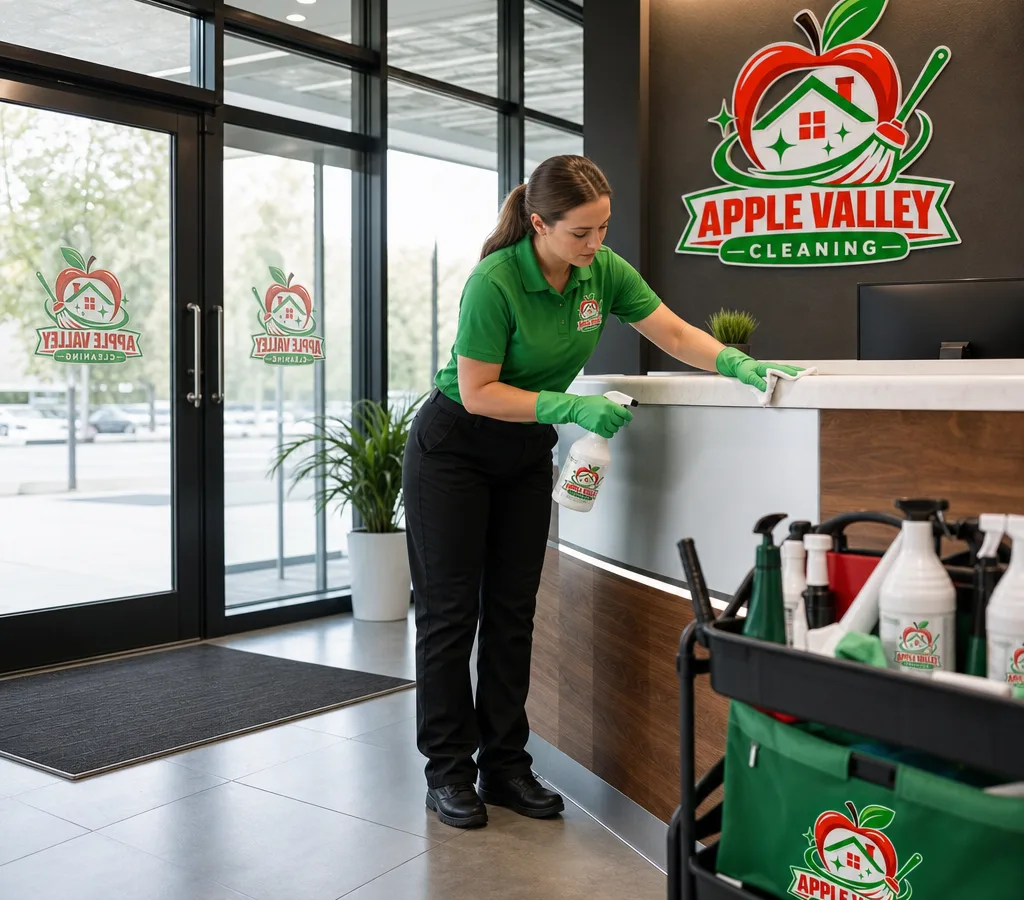
Medical facilities · Apple Valley
In a clinic, the line between housekeeping and clinical cleaning has to be explicit. We handle waiting rooms, restrooms, corridors and offices to a high standard, and leave clinical disinfection where it belongs: with your licensed staff.
Housekeeping, clearly defined
A medical facility has two cleaning programs running in the same building. One is clinical: operatory turnover, terminal cleaning, instrument reprocessing, regulated waste. That belongs to trained clinical staff under your own protocols. The other is housekeeping: the waiting room, reception, corridors, restrooms, breakroom and administrative offices.
We do the second one. Getting that distinction written down is the most important part of setting up a contract with a clinic, because a cleaning company that blurs it creates real risk for a practice, and one that leaves it vague causes arguments about who was supposed to wipe what.
Within housekeeping, a clinic is still demanding. Waiting rooms hold sick people for extended periods in shared seating. Door handles, check-in counters, pens, card readers and chair arms are touched continuously. Restrooms are used by unwell patients. Those are the surfaces our scope concentrates on.
Boundary first, then the work
Before scheduling anything, we walk the facility with your practice manager and mark every room as ours, yours, or restricted.
Waiting areas, reception fronts, corridors, public and staff restrooms, breakrooms, administrative offices and storage are normally ours. Treatment rooms, operatories, sterilization and lab areas, and anything holding clinical equipment or patient records are normally yours or access-restricted. Some practices want us in treatment rooms for floors and general surfaces only, after their staff has completed clinical turnover. That is workable, and it is written down precisely.
Touchpoints drive the routine. Door handles and push plates, check-in counters, card readers, waiting-room chair arms, light switches, handrails and restroom fixtures get attention every visit, because in a waiting room those are the surfaces shared by everyone who passes through.
Scheduling normally lands before opening or after the last patient. Practices with long hours sometimes take a mid-day pass for restrooms and the waiting room, which is where a clinic benefits most from a second visit.
Built for a clinical setting
Every room marked ours, yours or restricted, before the first visit. No assumptions in either direction.
Seating arms, check-in counters, card readers, handles and switches, cleaned every visit rather than weekly.
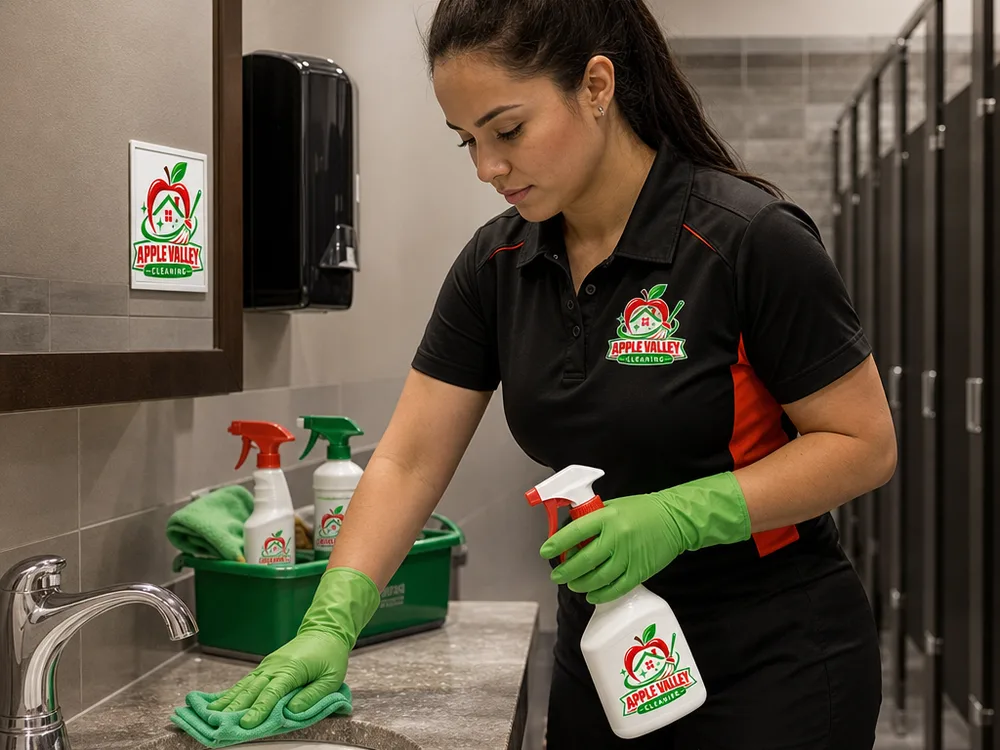
Structured every visit with consumables tracked. Patient-facing restrooms in a clinic carry more weight than in most buildings.
Clinic floors are usually vinyl or LVT and take heavy traffic. Correct chemical and method, so the finish is not dulled over time.
Assigned staff, documented access, and crews who understand that patient records and clinical areas are simply not touched.
Practice types
The clinical boundary sits in a different place in a dental practice than in a physical therapy suite, so the scope is drawn per practice rather than from a template.
Common Apple Valley medical settings:
Periodic floor work and carpet extraction in waiting areas are scheduled as separate projects, normally on a closed day so no patient session is disrupted.
How clinic cleaning is priced
Medical facility cleaning in Apple Valley commonly runs about $500 to $1,500 per month for a small practice cleaned three to five nights a week, and roughly $1,500 to $4,000+ per month for larger multi-provider clinics. Most practices clean daily, because waiting rooms and restrooms do not tolerate a two-day gap.
Cost follows square footage, number of restrooms, exam or treatment room count and how far into them the scope reaches, nights per week, floor type, and whether a mid-day pass is included. Practices that need documented visit logs for their own quality processes are quoted with that in mind.
Ours, yours or restricted. This happens before any discussion of price, because it defines the job.
Keys, alarm codes, which staff are assigned, and what happens if a room is occupied when we arrive.
Waiting areas, restrooms and shared touchpoints every visit, with the rest of the scope on its agreed frequency.
After the first month we adjust anything that missed, and keep a visit log you can check whenever you want.
Practice manager questions
No. Clinical disinfection, operatory turnover, terminal cleaning and instrument reprocessing are clinical procedures that belong with your trained, licensed staff under your own protocols. We provide housekeeping cleaning: waiting areas, reception, corridors, restrooms, breakrooms and administrative spaces. That boundary is written into the scope.
No. Sharps, regulated medical waste and any biohazard material stay entirely within your licensed disposal stream and are handled by your staff and your contracted medical waste vendor. We handle general and recycling waste only, and our crews are instructed not to touch clinical waste containers.
It depends on the boundary you set. Some practices want floors and general surfaces only, after clinical staff have completed their own turnover. Others keep treatment rooms entirely in-house. Both are common, and either is fine as long as it is decided explicitly rather than assumed.
No, and a cleaning company that does should worry you. We do not claim to deliver infection control, sterilization, or regulatory compliance. Those rest with your practice and your clinical protocols. We clean the non-clinical environment to a documented, consistent standard.
Assigned staff rather than a rotating pool, documented access, and a standing instruction that patient records, charts, screens and clinical areas are never touched, moved or read. Waste from any confidential stream is left for your own secure disposal, never handled as general rubbish.
Public restrooms and the waiting room can be refreshed mid-day, and for busy clinics that second pass is genuinely worthwhile. The main visit belongs before opening or after the last patient, so no cleaning happens around people waiting for or receiving care.
Boundary written, standard held
Tell us your practice type, room count and opening hours. We will walk the facility with your practice manager, mark every room ours, yours or restricted, and quote against that written boundary.
Request a quote
Send the details and we will come back with a written scope and a flat price, usually the same day.