Mirrors and stations, degreased
Product overspray lifted rather than smeared, with cloths changed often. The difference between clear glass and permanent haze.
Serving Apple Valley, Minnesota & surrounding areas
Salons & spas · Apple Valley
A salon does not get dusty, it gets sticky. Hairspray, powders, oils and color products settle into a film that ordinary cleaning smears rather than removes. This is a residue problem, and it needs the right approach.
Residue, not dust
Salon cleaning covers styling floors and stations, mirrors, wash and wet areas, treatment rooms, reception and retail displays, and restrooms. What makes it a distinct job is the soil: aerosol overspray, styling product, nail dust, wax and massage oils all leave a film that behaves nothing like household dust.
That film is why salons so often look dull despite being cleaned regularly. A general-purpose cleaner on a saturated cloth spreads hairspray residue across a mirror instead of lifting it, leaving a haze that gets worse with each pass. Mirrors, stations and the floor around every chair need a degreasing approach and clean cloths changed frequently.
Hair is the other constant. It migrates into every edge, under every station base and along every baseboard, and a quick sweep through the middle of the floor never reaches it. Edges and station bases are part of the routine here, not an occasional extra.
The right product for the soil
Work happens outside trading hours, either after close or before opening. A salon floor cannot be cleaned properly with clients in chairs, and wet areas need to be out of use.
Mirrors and stations get a degreasing approach with frequently changed cloths, because a cloth that has already picked up hairspray simply redeposits it on the next mirror. This single change is usually what fixes a salon that has looked hazy for months.
Floors are cleaned edge-first. Hair collects against baseboards, under station bases and around chair pedestals, so those are worked before the open floor rather than after. Color and product spotting on the floor is treated specifically, since dried color does not come up with a routine mop.
Wet areas take their own pass: shampoo bowls and their undersides, taps and hoses, tiled surrounds, and the drains and grate surrounds where product and hair accumulate and odor starts. Pedicure basins and spa wet rooms are handled to whatever boundary your licensing and your own protocols set.
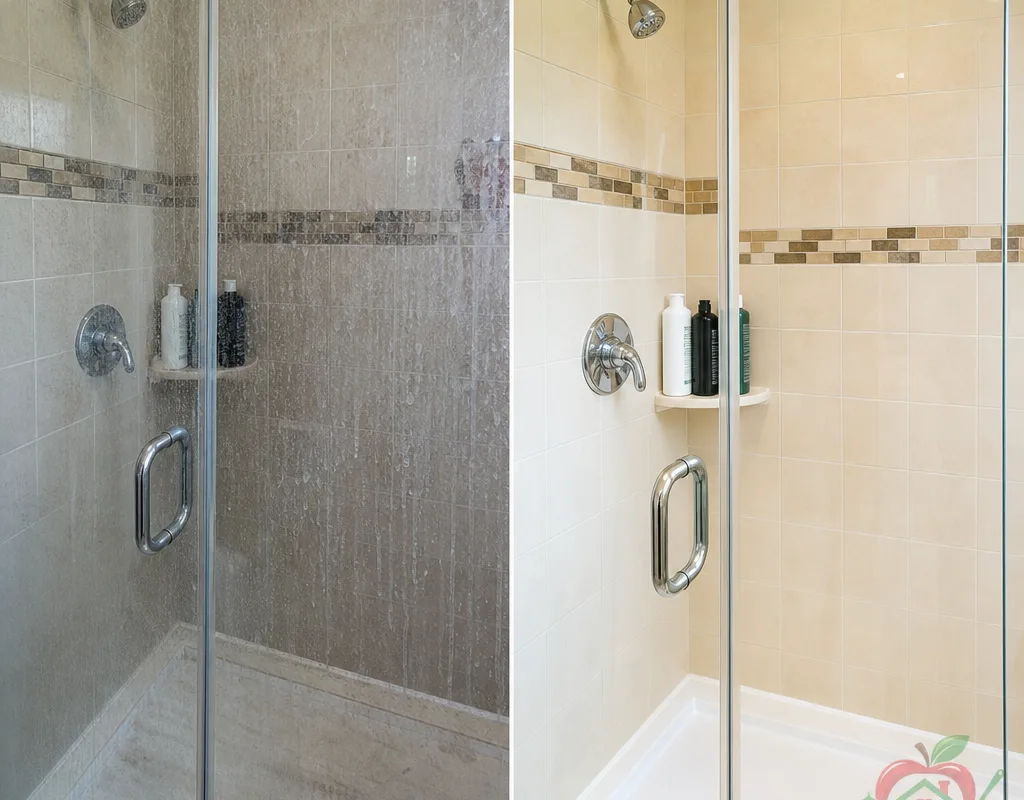
Product overspray lifted rather than smeared, with cloths changed often. The difference between clear glass and permanent haze.
Baseboards, station bases and chair pedestals worked before the open floor, because that is where hair actually collects.
Shampoo bowls, undersides, taps, tiled surrounds and drain grates, where residue and odor build up out of sight.
Counter, card reader, seating and retail shelving, kept clear of the dust film that makes product displays look tired.
Surfaces, floors and touchpoints cleaned to an agreed boundary, with anything your licensed staff must handle left to them.
Different rooms, different residue
Nail dust, hair clippings and massage oil are three completely different soils, and a single generic routine handles none of them well.
Common Apple Valley settings:
Periodic deep work on tile, grout and wet-area floors is scheduled separately on a closed day, since those surfaces need dwell time and have to be fully dry before use.
How salon cleaning is priced
Salon and spa cleaning in Apple Valley commonly runs about $400 to $1,200 per month for a small to mid-size salon cleaned five or six days a week, and roughly $1,200 to $3,000+ per month for larger spas with multiple treatment and wet rooms. Most salons clean daily, because hair and residue build up visibly within one trading day.
Pricing follows floor area, station count, number of wash bowls and wet areas, treatment room count, days per week, and how much periodic tile and grout work is included. Wet areas and treatment rooms carry more weight per square foot than open styling floor.
Seeing the space at its dirtiest shows the real residue load, which a morning visit would completely hide.
Tools, implements and anything your state board assigns to licensed staff stays with your team, in writing.
Mirrors and stations degreased, floors edge-first, wet areas and drains, then reception and restrooms.
Adjust frequency after the first month and book tile, grout and wet-floor projects onto closed days.
Salon owner questions
No. Tool and implement sanitizing is regulated by your state board and must be carried out by your licensed staff using approved methods and logged to their standards. We clean the environment: floors, stations, mirrors, surfaces, wet areas and restrooms. That boundary is written into the scope and it protects your license.
Almost always product residue being spread rather than removed. Hairspray and styling product build a film that a general-purpose cleaner on an already-used cloth just redistributes. The fix is a degreasing approach with clean cloths changed frequently, not cleaning more often. Most salons see the difference after a single visit.
General exterior and surround cleaning, yes. The internal sanitizing cycle for pedicure basins is regulated, has a specified method and dwell time, and is normally required to be performed and logged by your licensed staff between clients. We will define precisely where our work stops during the walk-through.
Treated specifically rather than mopped. Fresh color is far easier to remove than dried, so flagging a spill the same day matters. Color that has dried into grout or a porous floor may be permanent, and we will tell you that honestly rather than repeatedly charging to attack something that will not lift.
Restrooms and reception touchpoints can be refreshed mid-day if you want, and busy salons often do. Styling floors and wet areas need the space clear, so the main visit runs after close or before opening.
No. We do not claim to deliver state board sanitation compliance. Those standards and their record-keeping sit with you and your licensed staff. We deliver a documented environmental cleaning scope that supports a clean, presentable salon.
Residue handled, boundary respected
Tell us your station count, how many wash bowls or treatment rooms you have, and your closing time. We will walk the salon after a trading day, agree what stays with your licensed staff, and quote a routine built for salon residue.
Request a quote
Send the details and we will come back with a written scope and a flat price, usually the same day.