The low zone, every visit
Chair rungs, table undersides, cubby bases, low shelves and knee-height door frames. The surfaces adult-height cleaning skips.
Serving Apple Valley, Minnesota & surrounding areas
Schools & daycares · Apple Valley
Children touch the parts of a room adults never look at: chair rungs, table undersides, door frames at knee height, the bottom shelf. We clean from the floor up, because that is where the building is actually used.
A room used at a different height
Cleaning a classroom is not cleaning an office with smaller furniture. The zone that matters sits below adult eye level: floors children sit on, table and chair legs, cubby and locker bases, low shelving, door frames and handles at child height, and the lower half of every wall near a doorway.
That inversion is the whole job. An adult walking a classroom sees clean desktops and a tidy room. A three-year-old spends the session at the level where crumbs, spills and handprints accumulate, and that level is exactly what a routine adult-height clean misses.
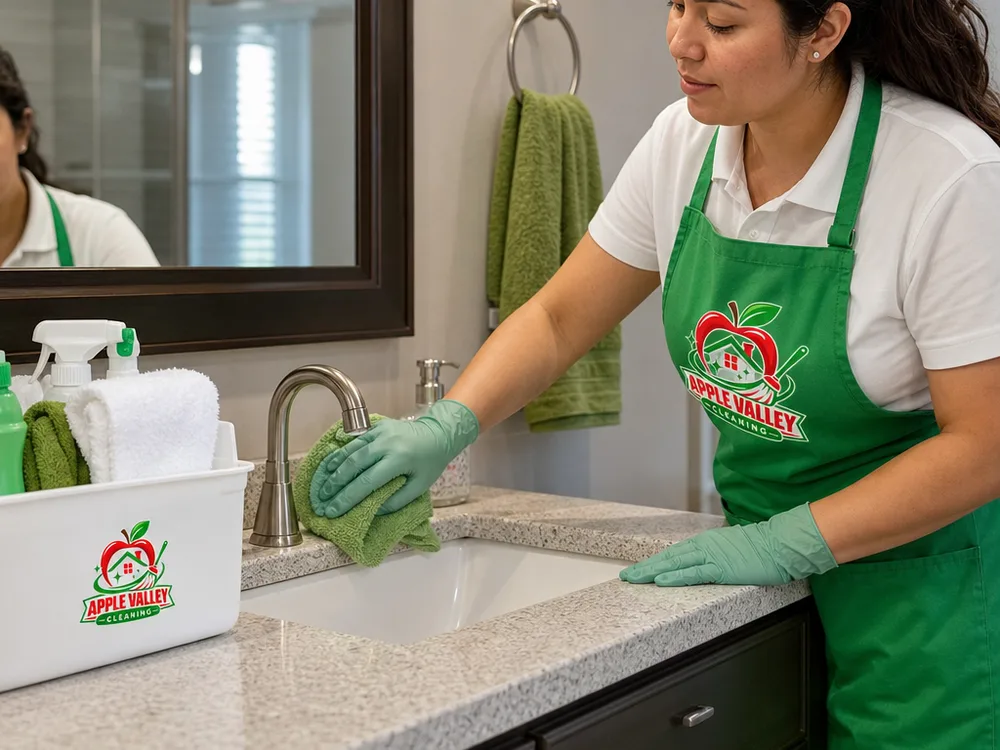
Apple Valley Cleaning weights the routine toward that zone, and schedules it outside session hours. Restrooms built for small children, with low fixtures and a much higher rate of contact, get structured attention every visit rather than a standard adult restroom pass.
Low surfaces first
Everything happens when children are not in the building. Before opening or after close, with access, keys and alarm procedure documented before the first visit and held to strictly.
The routine starts at the low zone. Chair legs and rungs, table bases and undersides, cubby and locker fronts and bases, low shelf edges, and door frames and handles at child height. These are the surfaces with the most contact and the least attention in a normal cleaning specification.
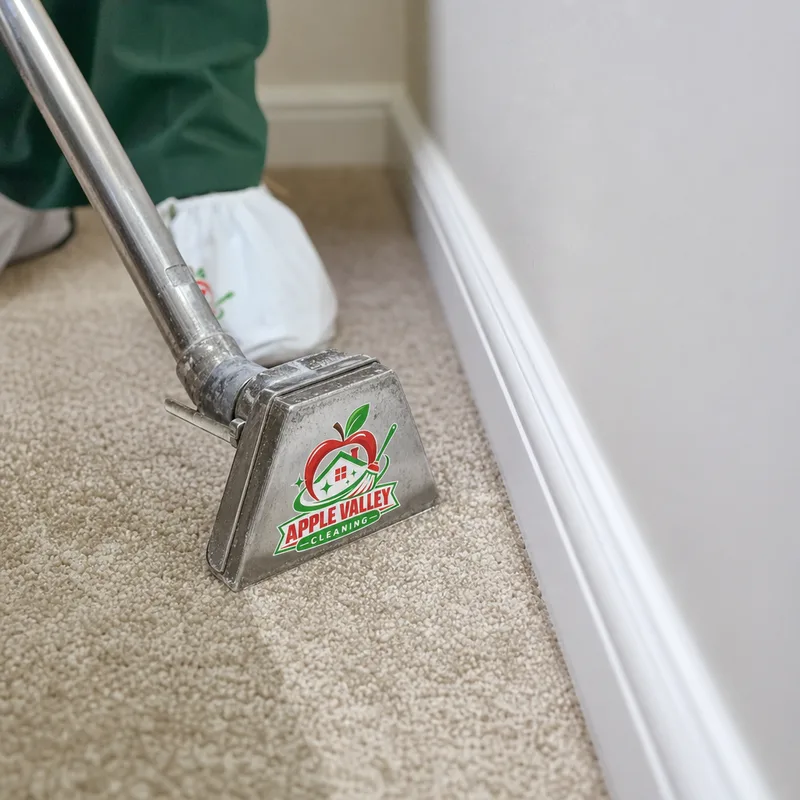
Floors follow, including edges and corners and under furniture where it can be reached, because floor space in a classroom is used as seating rather than just walked across. Soft flooring and mats used for floor time get their own attention.
Restrooms close the visit. Child-height fixtures, handles, taps and the floor around them get a structured pass every time. Anything that needs your own staff, like individual children's belongings, personal items or anything a licensing standard assigns to your team, is left alone and flagged rather than handled.
Chair rungs, table undersides, cubby bases, low shelves and knee-height door frames. The surfaces adult-height cleaning skips.
Children sit and play on the floor, so edges, corners and under-furniture areas are part of the routine, not an occasional extra.
Low fixtures, handles and taps with a much higher contact rate than an adult restroom, cleaned to a fixed standard every visit.
The pinch point where every child and parent passes twice a day, carrying in whatever is on the ground outside.
Assigned staff, documented access, and work scheduled strictly outside session hours.
Settings we clean
The younger the children, the lower and more contact-heavy the cleaning zone becomes, so scope shifts with the setting.
Common Apple Valley settings:
Deeper periodic work such as carpet extraction and hard-floor scrubbing is scheduled into breaks and closure days, when rooms can be emptied properly.
How this work is priced
School and daycare cleaning in Apple Valley commonly runs about $600 to $1,800 per month for a small center cleaned five days a week, and roughly $1,800 to $5,000+ per month for larger schools or multi-room facilities. Childcare settings almost always clean daily, since a gap is immediately visible.
Cost follows classroom count, total square footage, restroom and fixture count, days per week, floor types, and how much of the low-zone detail is included every visit versus weekly. Facilities that want a documented visit log for licensing or parent-facing reporting are quoted with that included.
From walk-through to term-time routine
We look at the building from the level it is used at, which is what sets the scope and the frequency.
What your staff handles under licensing standards, what we handle, plus keys, alarms and the hours we may be on site.
Low touchpoints, floors and restrooms every visit, with deeper items on an agreed weekly or monthly cycle.
We adjust after the first month and book the deeper floor and carpet work into your closure days.
Director and facilities questions
No. All work is scheduled outside session hours, before opening or after the last child leaves. This is both a safeguarding matter and a practical one, since classrooms cannot be cleaned properly while in use.
Toys, learning materials and anything children handle directly normally stay with your staff, because your licensing standards specify how and how often that is done and your team is trained to it. We clean the room, its surfaces and its floors. Where you want us involved, the exact items and method are written into the scope rather than assumed.
Crews assigned to childcare and school settings are vetted, and we keep the same staff on the route rather than rotating people through. If your facility requires specific checks, clearances or an induction before anyone works on site, tell us at the walk-through and it is arranged before the schedule starts.
No. Meeting childcare licensing and sanitation standards remains your center's responsibility. We deliver a documented cleaning scope to an agreed standard, which supports your program, but compliance itself sits with you and your licensing body.
Breaks and closure days are the right window for carpet extraction, hard-floor scrubbing and detail work that needs rooms emptied. We schedule these in advance around your calendar and quote them separately from the routine so day-to-day cleaning is never shortened to make room.
We can increase frequency on touchpoints and restrooms during an outbreak, and many centers arrange that in advance as a contingency. What we do not do is claim a cleaning visit will control transmission. Outbreak management is a health matter directed by your staff and public health guidance.
Low zone, outside hours
Tell us your room count, age groups and hours. We will walk the building at child height, agree exactly what your staff keeps under licensing standards, and quote a routine that runs outside session times.
Request a quote
Send the details and we will come back with a written scope and a flat price, usually the same day.